
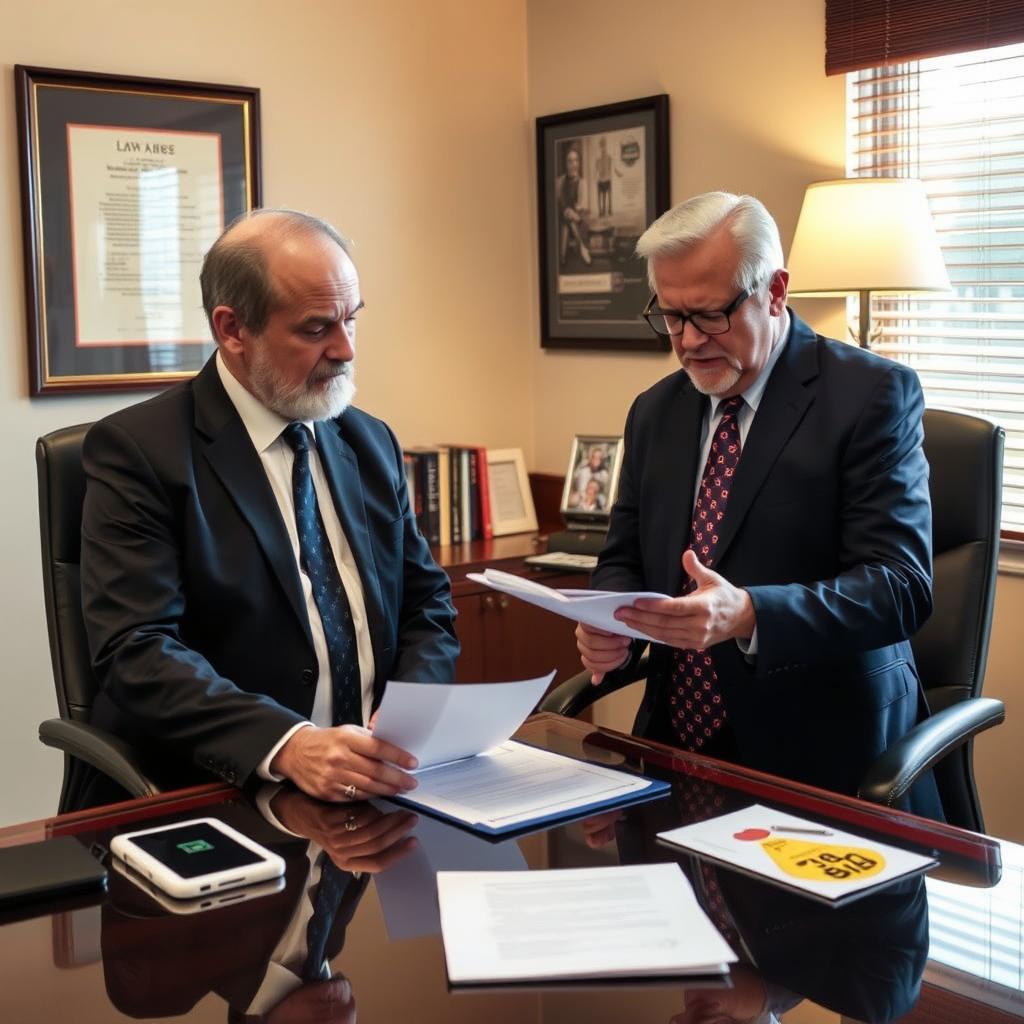
What are the consequences of refusing a breath test in New Jersey
Refusing to submit to a breath test after a New Jersey DWI stop triggers immediate administrative penalties separate from any criminal charge. Under New Jersey’s implied consent statute, simply driving on the state’s roads means you have already agreed to provide a breath sample when an officer has reasonable grounds to request one. A refusal forces the Motor Vehicle Commission to suspend your driving privilege, impose fines, and require the installation of an ignition interlock device. The refusal is also admissible in court, and the prosecution can argue it shows consciousness of guilt. The consequences become far more severe for a second or third refusal within a certain time window. If you refused a breath test during a stop on I-78, Route 31, Route 202, or any Garden State roadway, you need to understand what happens next. Law Offices Of SRIS, P.C. handles breath test refusal defense across New Jersey. Call (888) 437-7747 to discuss your matter with Mr. Sris and his Of Counsel. Law Offices Of SRIS, P.C. – Advocacy Without Borders.
Understanding Breath Test Refusal Consequences in New Jersey
New Jersey treats a breath test refusal as a separate civil administrative violation that runs parallel to the DWI charge itself. The refusal proceedings happen at the MVC, not the municipal court, although the fact of refusal will be brought into the court case. A first refusal leads to a mandatory license suspension, a fine, and the installation of an ignition interlock device. A second refusal within a ten-year window brings a longer suspension, higher fines, and extended interlock requirements. A third or subsequent refusal carries the heaviest administrative sanctions available under the statute.
Beyond the MVC penalties, the refusal becomes a powerful piece of evidence against you at trial. New Jersey law allows the prosecutor to inform the judge that you refused to provide a breath sample. The judge, sitting without a jury in municipal court, may infer that you refused because you believed your blood alcohol content was above the legal limit. The refusal does not, by itself, prove intoxication, but it seriously weakens any defense that relies on challenging the accuracy of chemical tests. For commercial drivers, a refusal can also trigger a federal out-of-service order and a separate CDL disqualification that impacts employment. Because a refusal creates both immediate administrative harm and long-term criminal-law exposure, it is important to address both fronts quickly.
Frequently Asked Questions
What is the implied consent law in New Jersey?
Under New Jersey’s implied consent statute, any person who operates a motor vehicle has already agreed to submit to a chemical breath test when a police officer has reasonable grounds to believe the driver is intoxicated. The law makes breath test cooperation a condition of holding a driver’s license. When an officer requests a breath sample during a lawful DWI stop, the driver must comply or face the separate refusal penalties. The statute does not require the driver to have been actually intoxicated; the officer only needs reasonable grounds. The refusal is treated as a civil violation handled by the MVC, not a criminal offense, but it carries significant administrative sanctions. Drivers should be aware that this consent applies automatically the moment they drive on New Jersey roads.
What happens if I refuse a breath test after a DWI stop?
When a driver refuses a breath test, the officer must read a standard statement explaining the consequences of refusal, and the driver’s refusal is documented. The officer will then seize the driver’s license and issue a temporary driving permit valid for a short window, after which the MVC will mail a notice of proposed suspension. The MVC will impose the refusal penalty unless the driver requests a hearing and successfully challenges the refusal foundation—such as a lack of reasonable grounds for the stop or the officer’s failure to properly read the refusal statement. The refusal penalty is separate from any DWI charge and can be imposed even if the driver is later acquitted of DWI. The MVC will also require proof of ignition interlock installation before restoring driving privileges.
Can refusal be used against me in court?
Yes, a refusal is admissible in municipal court as evidence of consciousness of guilt. The prosecution may argue that the driver refused because they knew they would fail the breath test. The judge can consider the refusal when evaluating the strength of the state’s case. However, the refusal alone does not establish intoxication and must be weighed with other evidence such as field sobriety tests, the officer’s observations, and any video footage. An experienced defense attorney can challenge the admissibility of the refusal if the officer failed to follow proper procedure when reading the implied consent statement or when requesting the sample. In some cases, procedural errors may lead to the refusal being excluded from evidence entirely.
What are the administrative penalties for refusing a breath test?
A first refusal triggers a mandatory license suspension, a fine, and an ignition interlock requirement. The MVC imposes these sanctions regardless of the outcome of the DWI case. A second refusal within a ten-year window carries a longer suspension, substantially higher fines, and extended interlock obligations. A third or subsequent refusal results in the most severe administrative penalties under the statute. In addition to MVC sanctions, the refusal will also result in insurance surcharges and points on the driver’s motor vehicle record. Commercial drivers face separate federal disqualification periods. Drivers should act quickly to request a hearing if they wish to contest the refusal; the window to demand a hearing is limited and if missed the suspension becomes automatic.
How long will my license be suspended for refusal?
The length of the suspension depends on the number of prior DWI or refusal convictions within the applicable lookback period. The MVC applies progressively longer suspensions for each successive refusal. A first offense results in a substantial suspension measured in months. A second refusal brings a suspension measured in years, and a third refusal can lead to a very long suspension or even revocation. The MVC calculates the suspension period from the date of the notice of proposed suspension unless a hearing is timely requested. The suspension for refusal runs separately from any suspension that may be imposed as part of a DWI sentence. Drivers who depend on their license for work should consult an attorney immediately to explore whether a stay of the suspension is possible pending a hearing or appeal.
Will refusal lead to an ignition interlock device?
Yes, a refusal triggers a mandatory ignition interlock requirement. Before the MVC will restore driving privileges, the driver must provide proof of installation of an ignition interlock device on any vehicle they own, operate, or have access to. The interlock requirement generally applies for a period that corresponds to the length of the suspension, and the driver is responsible for the cost of installation and monthly monitoring. The device requires a breath sample before the engine will start and at random intervals while driving. If the device records a high alcohol reading, it may extend the interlock period. A second or third refusal results in a longer interlock obligation. Compliance with interlock requirements is strictly enforced, and tampering with the device carries separate penalties.
Can I get a work license after a refusal suspension?
New Jersey does not issue hardship or work licenses for refusal suspensions. Once the MVC imposes a refusal suspension, the driver cannot obtain a limited driving privilege for employment, medical appointments, or other essential needs. This is a significant difference from some other states that allow conditional licenses. The only way to avoid the suspension is to win a refusal hearing and have the violation dismissed, or to have the penalty reduced through a successful appeal. Because there is no work-license alternative, drivers facing a refusal charge should treat the hearing as a critical proceeding. If the suspension is imposed, the driver must rely on alternate transportation until the suspension period ends and the interlock device is installed.
Does refusal avoid a DWI conviction?
Refusing a breath test does not prevent a DWI conviction and often makes the defense more difficult. A DWI case can be built entirely on other evidence, including field sobriety tests, the officer’s observations of impairment, driving pattern, and any open-container or admission evidence. The refusal itself is admissible and will be used against the driver. While the refusal eliminates the breath test result, it does not eliminate the prosecution. In fact, many DWI convictions occur without a chemical test. A driver who refuses may face both the refusal penalties and a DWI conviction, each carrying its own independent sanctions such as fines, jail time, license suspension, and interlock requirements. A refusal rarely helps the overall legal situation.
Should I contact a lawyer immediately after a refusal?
Yes, because the deadlines to challenge the refusal and the DWI charge are short. A refusal triggers both an MVC administrative proceeding and a municipal court case. The MVC sends a notice of proposed suspension with a strict deadline to request a hearing—often within days or weeks. If that deadline passes, the suspension becomes final without any chance to challenge it. Separately, the DWI court date will be set, and failing to appear can result in a warrant. An attorney can immediately evaluate whether the stop was lawful, whether the officer properly administered the implied consent warning, and whether any procedural defenses exist for the refusal. Early involvement can preserve options that disappear if the driver waits.
How can Law Offices Of SRIS, P.C. help with my refusal case?
Mr. Sris and his Of Counsel represent drivers facing breath test refusal charges in municipal courts across New Jersey and before the MVC. They review the roadside video, the officer’s report, and the administration of the implied consent warning to identify procedural errors and challenge the refusal. The firm also defends the companion DWI charge, working to protect your driving record, your license, and your ability to travel for work or family. With a former prosecutor on the team and over 120 years of combined legal experience between Mr. Sris and his Of Counsel, backed by 4,739+ documented firm-wide results, the firm understands how the state builds its cases and where the weaknesses tend to appear. Results may vary. For a consultation, call (888) 437-7747.
About Mr. Sris and His Of Counsel Team
Mr. Sris, Owner and Founder of Law Offices Of SRIS, P.C., has practiced law since 1997 and is a former prosecutor. He is admitted in Virginia, Maryland, the District of Columbia, New Jersey, and New York. Mr. Sris testified before the Virginia House Courts of Justice Committee in support of 2019 HB 635 (chief patron Del. David Bulova). He and his Of Counsel bring over 120 years of combined legal experience, backed by 4,739+ documented firm-wide results. Results may vary. Their approach to breath test refusal defense is built on a thorough review of the stop, the implied consent warning procedure, and the MVC’s proposed action. Mr. Sris and his Of Counsel represent drivers in municipal courts statewide and at administrative refusal hearings.
Mr. Sris and his Of Counsel also represent clients facing traffic charges in counties across New Jersey, including Hunterdon County, Somerset County, Morris County, Bergen County, and Jersey City.
Attorney advertising. Prior results do not guarantee a similar outcome.
Attorney responsible for this advertising: Mr. Sris.
Results may vary.
Case results depend on a variety of factors unique to each case.